


SRB | ENG
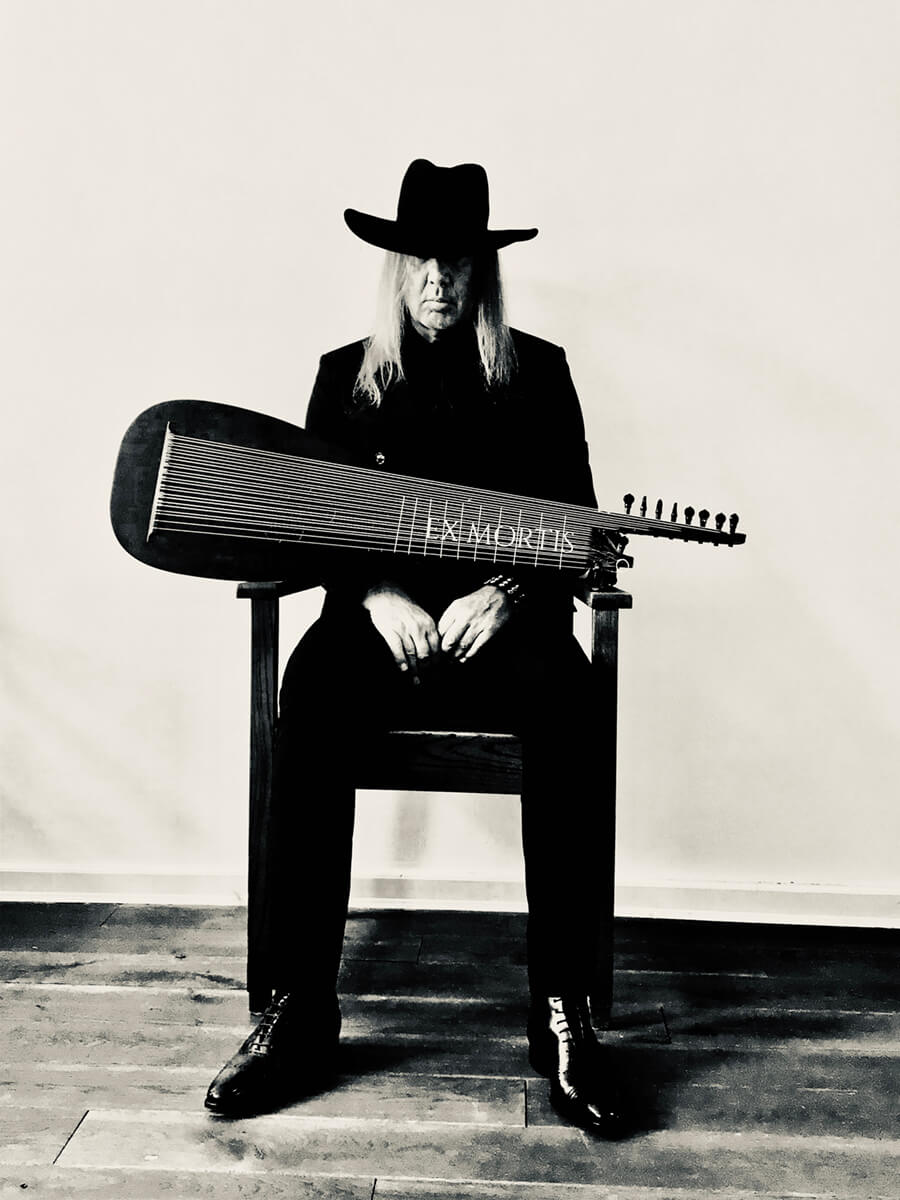
Jozef Van Wissem, an internationally acclaimed Dutch composer and lute player is coming to New Movie Theatre Zvezda on Thursday, 30 May. Renowned for his avant-garde approach to the Renaissance and Baroque lute, Jozef seamlessly blends historical music with contemporary sensibilities. His innovative compositions and collaborations, including his work with filmmaker Jim Jarmusch, have captivated audiences worldwide, earning him accolades such as the Cannes Soundtrack Award. Jozef’s unique artistry challenges conventional boundaries, making him a distinctive voice in both the classical and experimental music scenes. We’re thrilled to delve into his creative process, influences, and the journey that has shaped his remarkable career.

Can you tell us about your journey into music and what initially drew you to the lute?
Jozef Van Wissem: I studied classical guitar at the music school in Maastricht. My teacher gave me lute pieces to play on the guitar, from a book entitled “Music From Shakespeares Time“. She had a lute in the corner of her room but would not let me touch it. So I was mystified.
Who were some of your early musical influences, and how have they shaped your sound?
Ry Cooder, Velvet Underground, Js Bach for guitar. From Ry Cooder I got the idea to play slide on the Lute. From Bach to play arpeggios. From the Velvet to play only one or two chords.
Your music often blends classical and contemporary elements. How do you balance these two worlds in your compositions?
My compositions stem from the solo Renaissance and Baroque lute repertoire. I start of with playing the Classical pieces for a while and then usually a melody will form. It’s all about the melodies.
I add processed lute sounds too. Or sometimes I use processed field recordings. So the material becomes this flow, a wash of sound.
What role does literature, art, or philosophy play in your music creation process?
I use art theory I my work. Conceptual art theory. The idea comes first. The music follows.
I also find old books at markets with images I use. For example obscure wood cuts from the 1920’s. They are not online anywhere.
Most of your music is instrumental, but there are often songs with vocals, how do you decide where to include vocals?
I first write the lyrics and then add the sound. So it’s the other way around.
You’ve collaborated with a range of artists, including filmmaker Jim Jarmusch. How do these collaborations come about, and what do you gain from them creatively?
Collaborations happen naturally. I prefer collaborations with visual artists. So I can still learn something from them. I am not interested in musical techniques except solo lute technique.
Can you discuss your soundtrack work for “Only Lovers Left Alive”? How did you approach creating music for a film compared to your other projects?
I gave Jim 8 lute pieces which were the basis of the soundtrack. This was before the shoot. Then we added to them. I added a classical piece “Sick, Sick and Very Sick” which features in Shakespeare’s Much Ado About Nothing. That was under John Hurt’s role in the film Also I wrote a song for Zola Jesus.
Nowadays I prefer to work the same way actually. The music comes first. I like to create the atmosphere before there are any visuals. I did that recently with my score for the Cannes award winning film Un Prince. I gave the Director basic instructions where to place the pieces in the film. This was a true collaboration and a layered work. I added another storyline this way. If you place music under images that are already in place, there is no separate story line. And the producers will kill the film by having it edited to death. So in the end you don’t recognise your own work.
Can you share any memorable experiences from your collaborations?
The last short film we did for “The Call Of The Deathbird“ we shot at the mausoleum in Warsaw. I chose the location for its symmetry and had the idea for the film already a few years back on this beautiful site.
The meaning of the film however changed completely through recent events. The lyrics are about the corona pandemic.
Are there any authors you haven’t worked with yet whose films you’d like to record a soundtrack for?
I would have liked to work with Carl Dreyer.
What was the inspiration behind your last album The Night Dwells In The Day?
The inspiration behind The Night Dwells In The Day is the abominable state of the society we live in. The darkness of this world.
What are your favorite places or venues to perform, and why?
Cathedrals or Churches with a long reverb. Or any place with a good long reverb.
What are some of your most memorable live performance experiences?
Most memorable live experiences were in cathedral in Chernivtsi and at the Hermitage The useum in St Petersburg. In Chernivtsi people were fainting, it was a magical atmosphere. There is a video from the event. I played at the Hermitage museum in St Petersburg to perform the madrigal ‘ you know that i love you ‘by Arcadelt as depicted by Caravaggio in his painting ‘ the lute player’ (1596) at the event for the finalisation of the restoration of the painting. That became the piece “You Know That I Love You”. I miss playing in both countries.
You already played at Zvezda almost 10 years ago. Do you remember that concert? What memories do you have of it?
I remember playing in Zvezda Kino yes. They filmed me for a documentary about it. It was a cold day. The audience was beautiful.
It’s not your first time in Belgrade, do you follow the scene here and what kind of experiences do you have with gigs here?
I played in the eighties in Belgrade at a place called Art Club. I hung out with members form Laibach there and stayed on a bit in Novi Beograd. I felt at home. The concerts are always magic.
Photos: Promo
0 Comments